

As a solo founder, you wear every hat in the business.
When it comes to growth, paid ads are often the default choice because they offer instant feedback.
But ads are expensive, and the moment you stop paying, the traffic stops flowing. That’s where SEO comes in.
SEO is a long-term play, but unlike ads, it compounds over time.
The biggest hurdle for most founders isn’t the difficulty of SEO itself; it’s the cost and complexity.
Most advice assumes you have a dedicated marketing team and an expensive SEO tool like Semrush.
But you don't need a massive budget to start ranking. By choosing a more affordable Semrush alternative, you can access the essential SEO data you need without draining your budget.
SEO is manageable when you treat it like a system. By focusing on a few high-impact activities, you can build a sustainable traffic engine that works for you while you sleep.
Here is a practical, step-by-step guide to doing SEO as a solo team.
Step 1: Start With Keyword Research
Keyword research is the foundation of any successful SEO strategy.
If you target the wrong keywords, it doesn't matter how well you write or how fast your site loads—you won't get the right visitors.
As a solo founder, you can't afford to waste time on high-volume keywords that are dominated by giant corporations. You need to be smarter and more agile.
Focus on Buyer-Intent Keywords
Instead of chasing broad, educational terms, focus on keywords that indicate someone is ready to buy or solve a specific problem.
These are often called bottom-of-the-funnel keywords.
For example, if you sell project management software for designers, a broad keyword would be “project management.”
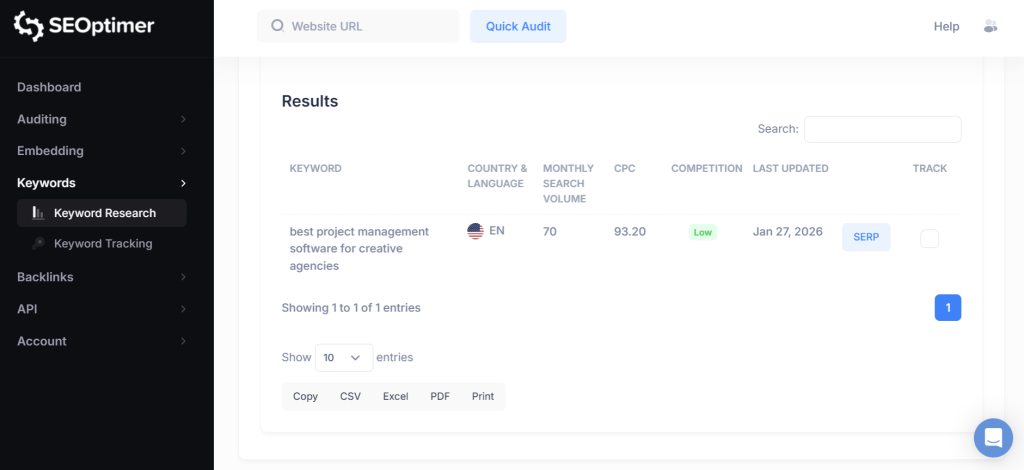
A buyer-intent keyword would be “best project management software for creative agencies.” The search volume is lower, but the conversion rate is significantly higher.
Use Long-Tail Keywords to Compete Faster
Long-tail keywords are phrases that contain three or more words.
They are more specific and generally have lower competition.
Ranking for “email marketing” is nearly impossible for a new site.
Ranking for “email marketing tips for vegan bakeries” is entirely doable. These specific queries often bring in highly qualified leads who are looking for exactly what you offer.
Build a Short List of Priority Pages
Don't try to optimize every single page on your site at once. Identify 5-10 money pages—your homepage, product pages, or key feature pages.
Focus your initial keyword research on finding the best terms for these specific pages.
Once these are optimized and starting to rank, you can expand your strategy to blog posts and educational content.
Step 2: Build a Simple SEO Content Plan
You don’t need to publish a new blog post every day. In fact, publishing low-quality content just to fill a schedule can actually hurt your rankings.
A realistic schedule for a solo founder might be two high-quality posts per month.
Create a Content Map
Start by mapping out your topics. Don't just write about whatever comes to mind. Group your content into clusters.
A topic cluster consists of one main pillar page that covers a broad topic (e.g., “Remote Work Guide”) and several supporting posts that link back to it (e.g., “Best Zoom backgrounds,” “How to manage time zones,” “Async communication tips”).
This structure helps search engines understand that you are an authority on that specific topic.
Focus on Helpful, People-First Content
Google’s algorithms increasingly prioritize content that is genuinely helpful to the reader. Don’t just rehash what is already on the first page of Google.
Add your unique perspective, data, or experiences as a founder.
Ask yourself: “Does this article actually solve the user's problem?”
If the answer is yes, you are on the right track.
Step 3: Nail the On-Page SEO Basics
Once you have your keywords and your content, you need to make sure Google understands what your page is about.
This is called on-page SEO. You don't need to be a developer to get this right.
Optimize Your Title Tags and Meta Descriptions
Your title tag is the blue link that shows up in search results.
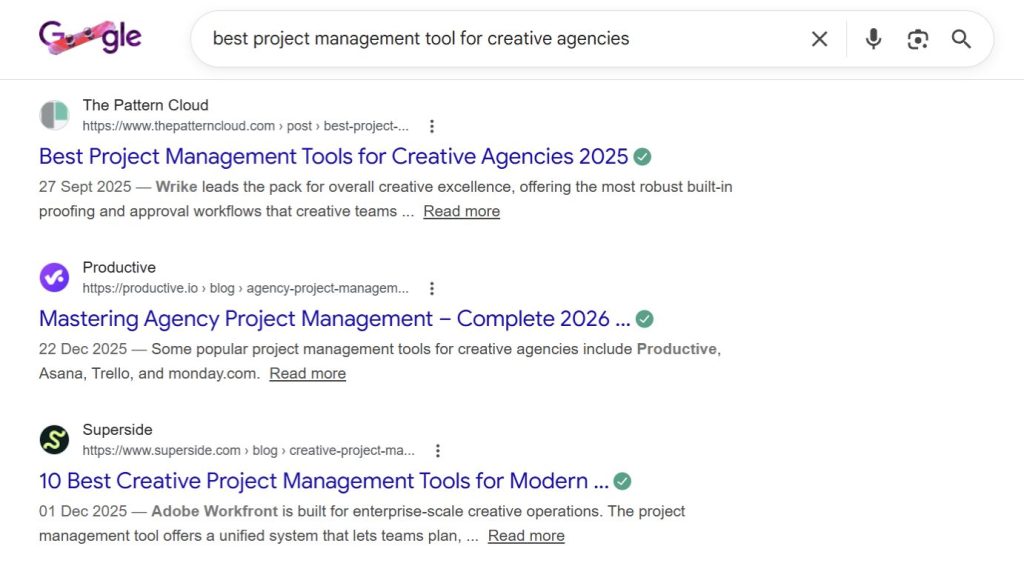
It is one of the most important ranking factors.
Make sure your primary keyword is in the title, ideally near the beginning. Keep it under 60 characters so it doesn't get cut off.
The meta description is the short paragraph under the title. It doesn't directly affect rankings, but it does affect whether people click on your link. Think of it as ad copy for your organic listing.
Write a compelling description that encourages clicks, and try to include your keyword naturally.
Structure Your Content with Headings
Use Heading 1 (H1) for your main title. Use Heading 2s (H2) for your main sections, and Heading 3s (H3) for sub-points.
This hierarchy helps screen readers and search engines understand the structure of your content. It also makes your posts much easier for humans to skim.
Use Descriptive URLs
Avoid messy URLs like yourdomain.com/p=123. Instead, use clean, descriptive URLs that give a clue about the page content, like yourdomain.com/seo-for-startups. This is a small signal, but every bit helps.
Step 4: Fix Technical SEO Issues Before You Scale
Technical SEO ensures that search engines can crawl and index your site without issues. If your technical foundation is broken, your content won't rank, no matter how good it is.
Ensure Your Site Is Mobile-Friendly
Google uses mobile-first indexing, which means it looks at the mobile version of your site to decide how to rank you. Test your pages to ensure they look good and function correctly on smartphones.
Text should be readable without zooming, and buttons should be easy to tap.
Speed Matters
Page speed is a ranking factor.
Users are impatient; if your site takes more than a few seconds to load, they will bounce.
You can check your site’s performance using Google’s PageSpeed Insights.
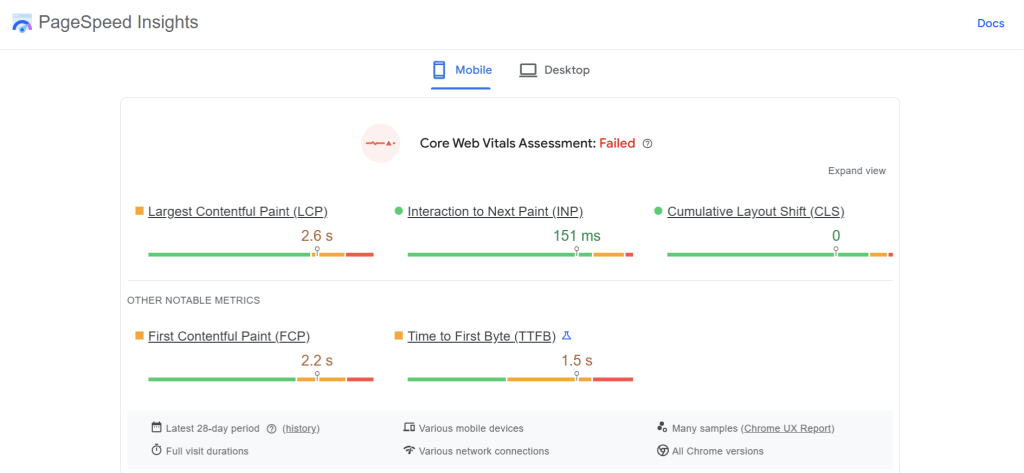
Often, simple fixes like compressing images or using a faster hosting provider can make a big difference.
Submit a Sitemap
A sitemap is a file that lists all the important pages on your website. It helps search engines find and index your content faster.
Most modern website builders (like WordPress, Webflow, or Shopify) generate sitemaps automatically.
You should submit this sitemap to Google Search Console to ensure Google knows your pages exist.
Step 5: Build Authority with Smart Link Building
Links from other websites to yours (backlinks) act like votes of confidence.
They tell Google that your site is trustworthy and authoritative. For a new site, building links is often the hardest part of SEO, but it is essential for competitive niches.
Quality Over Quantity
One link from a reputable, relevant industry blog is worth more than 100 links from low-quality directories.
Focus on earning links from sites that are related to your industry.
Ethical Link Building Strategies
Avoid black hat tactics like buying links or participating in link schemes.
Google's spam policies are strict, and getting caught can result in your site being removed from search results entirely.
Instead, try these solo-founder-friendly tactics:
- Guest Posting: Write valuable articles for other blogs in your niche in exchange for a link back to your site.
- Podcast Appearances: Be a guest on industry podcasts. The show notes will almost always include a link to your website.
- Fix Broken Links: Find broken links on resource pages in your industry and suggest your content as a replacement.
SEO is Manageable When You Treat It Like a System
If you can build out easily replicable SEO workflows then SEO can be scaled even as a solo founder.
In fact, as a solo founder, you have a massive advantage: agility.
You can make decisions faster, write with more personality, and connect more deeply with your audience than a faceless corporation can.
Start small. Pick 5 keywords. Write 5 great pages. Fix your technical basics. Then, repeat.
It might take a few months to see the graph move, but when it does, you'll have built an asset that drives growth for your business long after you've closed your laptop for the day.


 Is Online Gaming Safe for Digital Nomads? Security & Privacy Tips